
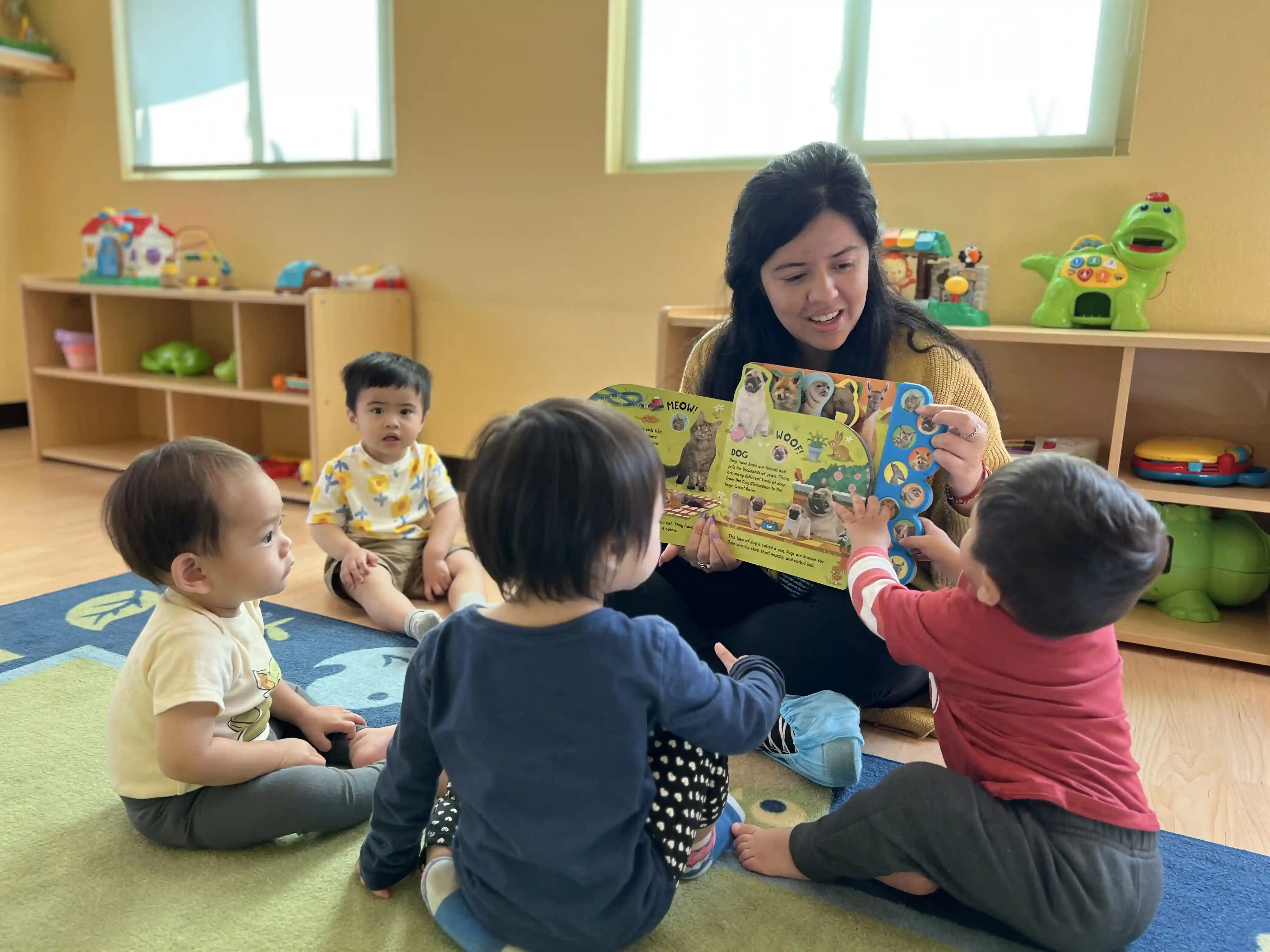
Self-help skills, dressing, feeding, washing, managing belongings, are the quiet half of the preschool curriculum, and arguably the half kindergarten teachers care about most. A child who can open a lunch container, put on a jacket, and manage the bathroom walks into every room more confident, because competence is where confidence actually comes from. Here’s the skill ladder from two to five, how teachers at O.C. Kids Preschool in Garden Grove build it daily, and the home habit that accelerates it most: doing less for your child, more slowly than feels natural.
Key takeaways
- Kindergarten teachers rank self-care, jackets, lunchboxes, bathroom, belongings, among their top readiness wishes, above letters.
- The ladder is predictable: feeding and undressing by 2–3, dressing and handwashing by 3–4, full bathroom independence and belongings management by 4–5.
- Preschool accelerates it through structure and peers: cubbies, jobs, and a room full of classmates zipping their own jackets.
- The adult skill is waiting, every task done for a child who could try it is a rep removed from their training.
- Struggle is the curriculum: the frustrated 90 seconds before the zipper catches is exactly where the growth is.
Which skills come when?
Loosely, children vary by months in every direction, the ladder runs like this. Around two to three: eating with utensils (messily; mess is technique under construction), drinking from an open cup, taking off shoes and socks, pushing arms into sleeves, helping with cleanup when it’s a song. Around three to four: dressing with easy garments, velcro shoes, handwashing as a full sequence without step-by-step reminders, pouring from a small pitcher, toileting with occasional backup. Around four to five: the whole bathroom run solo, jackets including the zipper start, opening every container in their own lunch, blowing their nose, and managing belongings, backpack to cubby, artwork into backpack, jacket found at pickup. Timing varies child to child and that’s normal; the sequence barely varies at all. What teachers watch is trajectory, steady movement up the ladder, and what families should watch is the gap between can’t and doesn’t: most “can’t” at home is “hasn’t been required to” wearing a costume.
How does preschool teach independence differently than home?
Three structural advantages. The environment is built for it: child-height sinks, hooks, and cubbies mean the room itself says you can, a child who can’t reach the home sink without a stool washes independently at school on day one. The schedule demands it at scale: one teacher cannot zip eighteen jackets, so the room runs on children doing their own, and children rise to rooms that expect things of them. Peers teach relentlessly: nothing motivates a three-year-old like a classmate doing the thing; skills sweep through a classroom the way songs do, and the child who watched a friend master the jacket-flip trick will drill it privately until they own it. Teachers add the deliberate layer, classroom jobs rotating real responsibility, taught tricks (the flip-the-jacket-over-your-head move is early-childhood technology at its finest), and calibrated help that assists the hard step without taking over the task. The result is the gap every parent notices: the child who “can’t” put on shoes at home does it daily at school, cheerfully, because here it was never optional and everyone else was doing it too.
What’s the right way to help without taking over?
Help the step, not the task, and wait longer than is comfortable. The pattern that builds skill: child attempts, struggles, and only then gets the smallest useful assist (“I’ll start the zipper; you pull it up”), with the finish left to them so the victory is theirs. The pattern that erodes skill: the adult, watching the clock or the struggle, swoops. Every swoop is rational in the moment and expensive in aggregate, a child helped past every hard step learns mainly that hard steps summon adults, and “I can’t” becomes a strategy rather than a report. Build slack so you can afford the slow version: shoes go on ten minutes before you need them, and the morning schedule assumes the four-year-old pace, not the adult one. Praise the process, “you kept trying and it worked”, because that’s the part you want repeated, and let the struggle breathe: the frustrated ninety seconds before the zipper catches is not a problem to solve. It’s the workout, mid-rep, and rescuing a child from it is lifting the weight for them.
Where should home start this week?
Pick two skills, engineer the environment, and go slow. A stool at the sink and soap they can pump makes handwashing self-serve tonight. A low drawer holding school-legal clothes makes self-dressing possible tomorrow. Serving bowls on the table let a three-year-old serve themselves; a small pitcher lets them pour; the open cup at dinner builds the skill the sippy cup postpones. Give one real household job, napkins on the table, spoons in the drawer, done daily, because contribution is the identity layer under all these skills: children who see themselves as capable helpers attempt more everywhere. Then coordinate with school: ask what your child does independently here, because the gap between school-competent and home-helped is almost always parental habit, not ability, children save their fiercest “I can’t” for the people most likely to do it for them. And expect the phase where independence itself becomes the battle (“I DO IT” over a jacket you’re already late for): that’s the drive you wanted, arriving inconveniently. Protect one by-myself station, shoes are ideal, and start it earlier. The drive needs a venue, not a veto.
Frequently asked questions
My child can dress herself but refuses to. Why?
Skill and willingness are different systems, refusal is usually a bid for connection or control. Offer choice within the task, make it social, and don’t reopen negotiations on skills already won.
Isn’t it faster to just do it myself?
Today, yes. For the next thousand mornings, no. The two slow weeks it takes a child to own a skill repay themselves for years.
What about buttons and shoe-tying?
Buttons typically land around four to five; tying is a kindergarten-era skill for most. Velcro now, laces later, the classroom’s fine motor work is building toward both.
How do classroom jobs work here?
Every child rotates through real responsibilities, line leader, table helper, plant waterer. It’s the contribution identity, systematized. Ask to see the job chart on your tour.
Come watch a room of children put on their own jackets in under three minutes, it’s genuinely impressive. Call (714) 530-7263 to tour O.C. Kids Preschool in Garden Grove.