
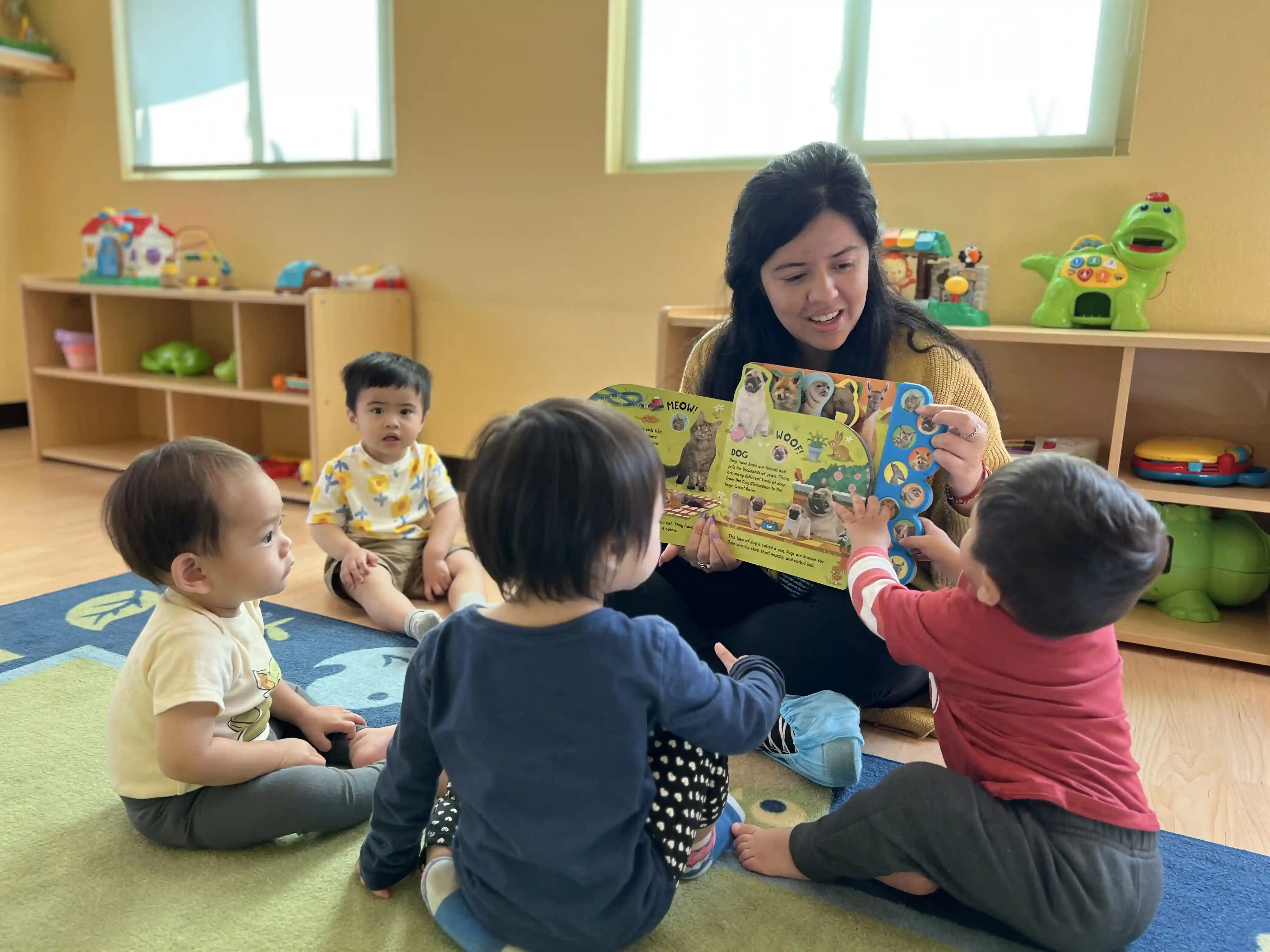
In many families, a grandparent’s full-time care is the first childcare, and it’s often a wonderful one. Around the third birthday, many families notice a shift. The child who did great with loving one-on-one attention starts wanting other kids, a routine, and a bigger world. Preschool is often the right next step at that point. It’s still a real change for the child, for the grandparent who may feel “replaced,” and for the parents in the middle. Here’s how the move can go well, based on how we walk families through it at O.C. Kids Preschool.
Key takeaways
- Signs it may be time: lighting up around other kids, getting bored with the home routine, and skills that have outgrown one-on-one care.
- One-on-one care and group care build different things. The switch isn’t from worse to better. It’s the next step after an excellent first one.
- Children from family care often arrive strong with language and new to taking turns. Both are normal, and the classroom helps with both.
- Grandparents need care in this change too. Give them a new role instead of removing the old one: Friday pickups, special afternoons, and front-row seats at every event.
- A gradual start works well. A few preschool days a week, with grandma covering the rest, gives everyone time to adjust.
How do we know it’s time to switch?
Your child usually tells you through behavior. Three signs tend to show up together in the late twos or threes.
Peer hunger. At the park, your child stops circling the adults and starts circling other children. They watch other kids closely and are sad when those kids leave. Playdates help, but a three-year-old’s social growth often wants more: the same faces every day, long enough to make real friends and work through real disagreements. That’s what a group setting offers.
Outgrowing the routine. The home rhythm that suited a toddler starts to show boredom. There’s more friction, more requests for screens, and more “What are we doing today?” A three-year-old’s hunger for new things and projects can be more than one adult can supply, day after day, no matter how devoted. Even energetic grandparents often say so, and many say it first.
Ready for structure. Your child starts to love routine and order. They ask for the same schedule and enjoy the rituals of story hour at the library. That’s a good sign for a classroom.
One thing is not a signal: guilt. Family care wasn’t lesser. It was the right first chapter, and what it gave your child is exactly what they’ll bring to preschool: security, language, and a strong attachment.
What will be different for a child coming from family care?
The one-on-one attention gets shared, and the day gets wider. Both are on purpose, and most children adjust faster than parents expect.
A child from grandparent care usually brings real strengths. Language is often rich, thanks to years of adult conversation, sometimes in two languages. That’s a strength to protect. Attachment is secure, and the child is comfortable with adults.
The gaps are usually in group skills.
Waiting. At grandma’s, needs got met quickly. A classroom has lines and turns.
Sharing adult attention. One teacher for a roomful of kids is a big change.
Working out conflicts with peers. At home, an adult settled arguments right away. In class, teachers coach children to handle disagreements themselves. It’s harder, and it’s good for them.
Following group signals. Transitions are announced to the whole room, not to one child personally.
Here are two reassurances. First, those gaps tend to close quickly, because the room practices these skills all day. Many children new from home pick up group skills quickly once they’re in the room. Second, the strengths stay. The language skills and comfort with adults carry over, and kids from family care often become the room’s confident question-askers.
Expect a dip before things get better. There may be more tiredness, some tears at drop-off, and a few weeks of “There are TOO MANY KIDS.” That’s what adjusting sounds like.
How do we handle the grandparent side of the change?
With the same care as the child’s side. A grandparent’s bond with the child is a real attachment, and “replacement” can sound like a verdict on their care.
Get ahead of that. Say that the move is the next step their excellent care made possible, because it’s true. Then build a lasting role that’s theirs: the Friday pickup, the standing Wednesday afternoon, the summer weeks, and the front-row seat at every celebration.
Grandparents on the authorized pickup list can stay part of the school’s daily life. Walk them through how pickup and sign-out work, and what the goodbye routine looks like. Introduce them to the teachers, too. A grandmother who gets greeted by name and shown the day’s artwork at pickup usually warms up quickly.
A part-week start can help everyone while things settle. Some families try three preschool days and two grandma days, if the program offers a part-week schedule. Keep it steady. Three fixed days work better than four that change, because the child needs a pattern to learn, and so does grandma.
For your child, talk about adding, not replacing. “Grandma still has you on Fridays, and school gives you friends.” That matches the truth. Families who tell it this way often find the change was not about taking something away. It added people to your child’s circle.
What does a good start look like?
Gradual, steady, and boring everywhere else.
Phase the schedule. Children coming from one-on-one care often do better with a gradual start, if the program allows it. First comes a visit with the parent or grandparent, since a trusted adult introducing the new place passes along some trust. Then short solo mornings, then lunch, then nap, then full days. Stay at each step until it feels boring.
Keep the rituals the same. Use the same goodbye every time. Keep the lovey in the cubby. Describe pickup in terms of the day (“after outside play”). For the first few weeks, have the same adult do drop-off. Your child is learning one new world and shouldn’t also learn a rotating cast of drivers.
Hold everything else still. The first weeks are a poor time for potty pushes, bed changes, or giving up the pacifier. Take one big step at a time. Protect sleep, too, since group days are tiring in a way home days weren’t.
Keep talking with the teachers. Share your child’s history: what soothes them, what words your family uses, and what grandma’s tricks are. That includes home-language comfort words. A scared two-year-old deserves comfort in the language of home, and it helps teachers to know those words. Ask how you’ll hear about your child’s day.
Many families find that visible adjustment takes a few weeks, and that settling in fully takes a bit longer. You’ll know it when your child names friends at dinner, sings the room’s songs at bath time, and treats Friday afternoons with grandma as the treat they now are.
In the end, your child has all of it: the peers, the learning, and the people who loved them first.
Frequently asked questions
Is starting group care at three “late”?
No. Three is a common and developmentally sound starting age. Time with peers matters more from here on, and the family-care years built real strengths. Catching up on group skills usually takes weeks.
Grandma thinks it’s too soon. How much weight should that get?
Real weight, since she knows your child well. It’s also fair to remember that she has her own feelings about the change. Bring her observations to the tour, bring her along too, and let your child’s behavior help decide.
Will my child lose their home language once they start preschool?
Keeping it up at home really helps. Research on bilingual children supports continuing to speak your language at home and with grandma, and many children go on to keep both languages as they grow. If you have concerns, talk with the teacher and your pediatrician.
Can grandma do the drop-offs once we start?
Yes, once the first weeks have settled, as long as she’s on the authorized pickup list and knows your child’s goodbye routine. For the first stretch, keep drop-off steady with one adult. Then widen the circle.
Bring the whole village to the tour, grandma included. She’ll have the best questions. Call (714) 530-7263, O.C. Kids Preschool in Garden Grove.