
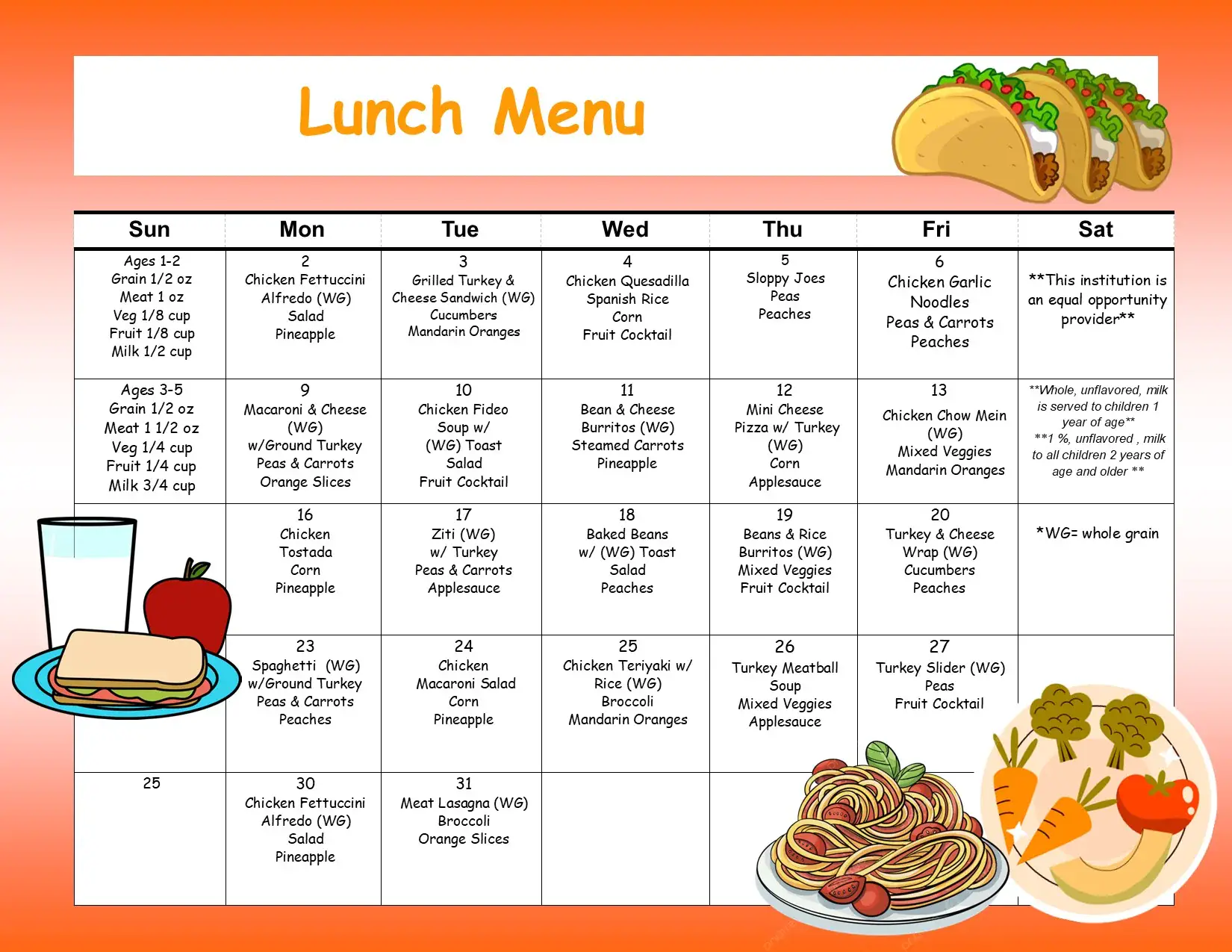
Meals and snacks are prepared on-site at O.C. Kids Preschool in Garden Grove and served on a published monthly menu, breakfast, lunch, and afternoon snack, so families are not packing a lunchbox at 6:00 AM. For most working parents, the meal program is the quietest time-saver in the whole week, and it's also where a preschool's day-to-day standards are easiest to inspect.
Key takeaways
- Breakfast, lunch, and snacks are cooked on-site and posted on a monthly menu you can read before you enrol.
- Serving food family-style teaches serving, pouring, and clearing, it's part of the curriculum, not a break from it.
- Allergies and dietary restrictions are documented at enrollment and posted in the classroom and kitchen.
- Picky eating at two and three is developmentally normal; repeated calm exposure works better than pressure.
- Ask any program for last month's menu, not a sample one, the difference tells you a lot.
Why does a preschool meal program matter beyond convenience?
Because a child in full-day care eats most of their weekday food at school. Two of three meals plus a snack, five days a week, land inside the campus, which makes the menu a genuine part of your child's diet rather than a detail. It's also one of the few things a parent can evaluate directly: you can read a month of menus in ninety seconds and learn more about a program's standards than an hour of conversation would tell you.
How are meals served in the classroom?
Family-style at the table, with children doing as much as they safely can, passing a bowl, serving a portion, pouring from a small pitcher, clearing a plate. It's messier than plating food in the kitchen and it's deliberate: serving yourself builds fine motor control, portion awareness, and the language of a shared meal. Teachers sit and eat with the children rather than supervising from the side, which is where most of the conversation and modelling happens.
What about allergies and dietary restrictions?
Documented at enrollment, recorded on the child's file, and posted where the food is prepared and served. Tell us at the tour or during enrollment, not on the first day, a serious allergy sometimes changes what a classroom can serve at a shared table, and that's a conversation worth having before your child starts. Families with religious or cultural dietary requirements should raise those the same way; Garden Grove families bring a wide range of them and we plan around them.
My child is a picky eater, will this work?
Usually better than home does. Picky eating peaks between about two and four and is a normal stage rather than a problem to solve. What works in a classroom is repetition without pressure: the food appears, nobody comments, and a child who refuses broccoli eleven times eats it on the twelfth after seeing three friends do it. What doesn't work, anywhere, is negotiating, bribing with dessert, or making the meal a contest of wills.
Frequently asked questions
Do we need to pack a lunch?
No. Breakfast, lunch, and an afternoon snack are prepared on-site and served on the published monthly menu. Our Center follows the States Child and Adult Meal Program and we are audited yearly to ensure nutritious and safely served meals.
Can I see the menu before enrolling?
Yes, the monthly theme and menu are published on our site, and you're welcome to ask for previous months at a tour.
What if my child has a food allergy?
Tell us at enrollment. Allergies are documented on your child's file and posted in the kitchen and classroom, and staff are briefed on the specific child.
Will you tell me what my child actually ate?
Yes. Teachers report on eating along with the rest of the day, so you know whether to plan a bigger dinner, particularly useful during the picky-eating stage.
Curious what's on the menu this month? Call (714) 530-7263 or stop by our Brookhurst Street campus, ask to see the kitchen while you're here we'd be happy to show you!