
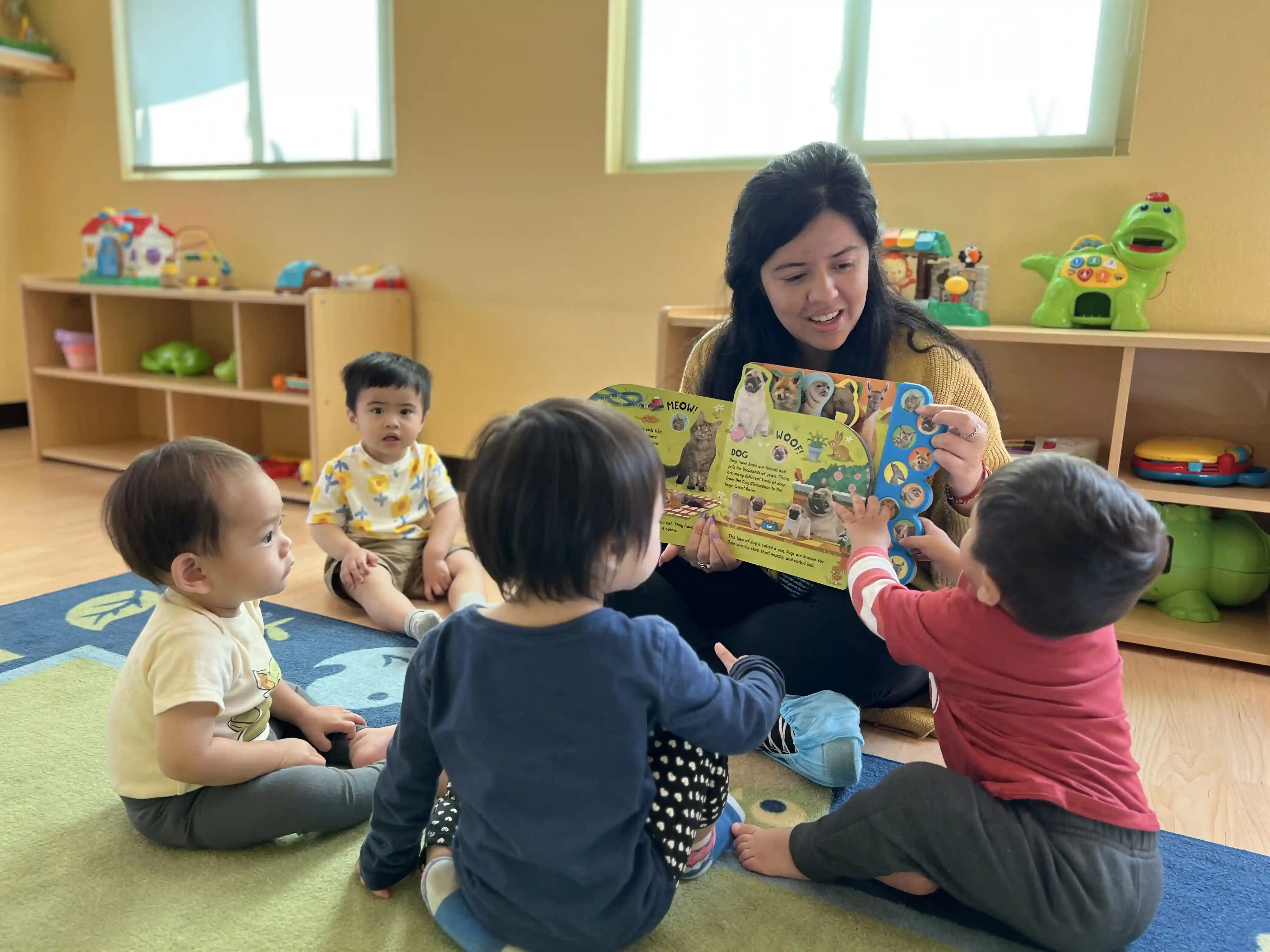
A preschooler with blurry vision may not complain about it. They haven’t seen anything else, so they may assume that’s how the world looks. A child with mild hearing loss may not report it either. They may just miss things and get called a daydreamer. That’s why screening matters. Problems with sight or hearing are hard for a young child to describe, and doctors often like to find them early. Here’s what parents should know about both senses: the signs, the usual screening schedule, and what teachers at O.C. Kids Preschool in Garden Grove can notice during the day. This is general information, not medical advice. Your pediatrician is the right person for questions about your child.
Key takeaways
- Young children rarely report problems with sight or hearing, so screening and adult observation do most of the work.
- Vision has a time window. Doctors generally want to find lazy eye (amblyopia) early, while the brain’s vision pathways are still developing.
- Fluid from ear infections can muffle hearing for weeks or months, which can overlap with the years when language is growing fast.
- Pediatric checkups often include vision and hearing screening. Ask about the results instead of assuming it happened.
- Teachers see children all day and can spot patterns, like squinting at books, turning one ear toward the story, or “not listening,” and share them with families.
Why can’t we just wait for the child to tell us?
Because their normal is the problem. A young child who is nearsighted may not realize trees are supposed to look crisp. A child hearing through ear fluid may think that volume is normal and not know there are sounds in the story being missed.
Children often adapt. One sits closer, and another watches faces. Those habits can hide the problem while it affects things preschool is building, like noticing letter shapes or learning the sounds in words.
Both problems also have a time window.
For vision, the concern is amblyopia, where the brain learns to ignore an eye that sends a blurry or mismatched image. Doctors often recommend finding it early, while a child’s vision is still developing, and your pediatrician can tell you about timing. That’s why vision screening aims to catch risk factors before symptoms show.
For hearing, the window is language itself. Even mild or on-and-off hearing loss during the years of fast vocabulary growth may affect speech and language. In households where two languages are being learned, clear hearing matters just as much.
Screenings, checkups, and teacher observation all exist for the same reason: the child can’t tell us what’s wrong.
What signs can adults spot?
The signs show up in behavior, and they differ for each sense. A single instance means little. A pattern calls for an appointment.
Vision signs. Look for sitting nose-close to books or puzzles, squinting or closing one eye at far-away things, and tilting the head to look. Also watch for an eye that drifts or crosses, especially when tired. Parents sometimes dismiss that as tiredness, but any eye that drifts deserves an eye exam. Rubbing eyes outside of sleepy times, frequent clumsiness, and avoiding close work like beading can also be clues. Avoiding close work can look like disinterest when it’s really a focusing problem.
Hearing signs. Talking loudly, sitting close to sound, and saying “WHAT?” a lot are common clues. So is being labeled “not listening,” when the child misses instructions given from behind but responds fine face to face. Children often lip-read without knowing they do it. Other clues are turning one ear toward the story, speech that’s unclear for their age, and a pattern of foggy weeks after each ear infection.
Teachers see children all day, so they’re good at noticing patterns. If a teacher says, “Have you noticed he often…” at pickup, treat it as useful information, not just politeness.
How does the screening schedule work, and where are the gaps?
There are usually several layers.
- Newborn hearing screening, usually done at the hospital.
- Pediatric well-visits, which often include vision and hearing checks. Some pediatricians use a photoscreener, a device that looks for risk factors for lazy eye in children who are too wiggly for a chart. Chart-based tests come as a child can cooperate.
- Formal testing by an eye doctor or an audiologist (hearing specialist) on referral, such as after a failed screening, repeated ear infections, or speech delays.
- Screenings at school entry.
There are two places where families can help.
Ask for the results. Try “Did we do vision and hearing today, and what were the results?” Busy visits sometimes skip steps, and a squirmy toddler may get “we’ll try next year.”
Follow up on patterns, even after a passed screening. A passed screening doesn’t rule everything out. If you keep seeing signs, ask your pediatrician about a full exam with an eye doctor or an audiologist, especially for a child whose hearing tested fine during a week with no ear fluid. These exams are designed for children who can’t read charts or follow directions.
What happens when something is found?
Often there’s a clear next step, and your child’s doctor can explain the options.
Vision. Options can include glasses made for young children and treatments such as patching or eye drops for lazy eye. Your child’s eye doctor can explain which option fits and when to start.
Hearing. Care depends on the cause. Fluid from repeated ear infections may be monitored or treated, sometimes with a procedure to place ear tubes. When hearing loss is lasting, hearing aids and other supports are options. A doctor may suggest speech therapy if there is a gap.
At school. The adjustments are usually simple. A child with glasses might get a case in the cubby and friendly encouragement. A child who hears less well might get a seat near the story, instructions given face to face, and teachers who check that directions landed.
The details depend on your child, so follow your doctor’s advice and ask what to expect.
Frequently asked questions
My toddler won’t cooperate with any eye chart. How can screening work?
Some pediatricians use photoscreening, where a device checks for risk factors for lazy eye from a quick, photo-like scan with no need for cooperation. Ask your pediatrician whether it’s been done.
Do ear infections cause permanent hearing loss?
That’s a question for your pediatrician or an audiologist. What doctors watch for is fluid that lingers for months and muffles hearing while language is developing. If infections keep coming back, ask about a referral to an audiologist or an ear, nose, and throat doctor.
Will my child keep glasses on at preschool?
Ask the teacher how they’ll help. A case in the cubby and, for outdoor play, a strap can make glasses easier to manage.
The teacher flagged something, but our screening was normal. Who’s right?
It’s possible both are. A screening is a quick snapshot, and a teacher sees patterns over many days. A flagged pattern is a good reason to ask your pediatrician about a full exam.
Ask your child’s teacher what they see in the classroom. It can be a useful extra set of eyes. Call (714) 530-7263, O.C. Kids Preschool in Garden Grove.